

Cold storage and cold chain operations are expanding rapidly, but extreme temperatures, moisture, and condensation cycles create labeling challenges that can lead to scan failures and operational disruption. Reliable performance depends on selecting freezer-grade labels designed for both application and service conditions, especially in environments with frequent temperature transitions. In most cases, synthetic labels with freezer-grade adhesives and protective laminates outperform paper by maintaining adhesion and readability. Choosing the right label materials and format helps reduce maintenance, prevent errors, and improve long-term efficiency in cold storage environments.
Online Grocery Shopping Feeds Demand for Cold Storage
As demand for online grocery delivery and temperature-sensitive fulfillment continues to grow, the need for reliable cold chain logistics infrastructure is accelerating across the United States. Grocery delivery platforms have reshaped expectations for speed, availability, and product integrity, especially for perishable and frozen goods.
Online grocery adoption is projected to exceed $450 billion in U.S. sales by 2028. And this shift is driving sustained investment in cold storage warehouses, freezer distribution centers, and automated fulfillment systems designed to maintain product quality throughout the supply chain. At the same time, the U.S. cold chain market is projected to grow from approximately $73 billion in 2023 to more than $216 billion by 2030.
That's why now more than ever, facilities need barcode labels to support cold chain storage environments, where products are exposed to constant temperature changes, moisture, and handling throughout storage and transport.
Keep reading to learn more about the growing importance of using high-quality cold storage barcode labels.
Cold Chain Logistics and Label Performance
Cold chain logistics is the controlled storage and movement of temperature-sensitive products such as frozen foods, pharmaceuticals, and perishables across a supply chain that must maintain strict temperature ranges. From cold storage warehouses to refrigerated transport and final delivery, product integrity depends on consistent environmental control and accurate tracking.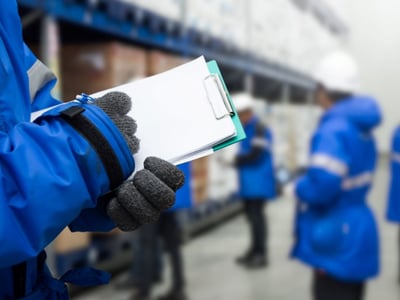
As goods move between freezer storage, transport, and ambient environments, they undergo repeated temperature transitions. These shifts create condensation on packaging surfaces, which is one of the primary causes of label failure in cold chain storage operations. Moisture exposure during thawing and refreezing can weaken adhesion and impact barcode readability.
To perform reliably, cold chain labels must be engineered for both frozen storage and environmental transitions, not just static freezer conditions. They must remain adhered and scannable through condensation cycles, handling, and regulatory checkpoints. Because accurate identification is essential for traceability, audits, and recalls, label performance is a critical requirement in modern cold chain storage environments.
Labeling Cold Storage Facilities Has Unique Challenges
The number of cold storage facilities continues to expand in major logistics hubs such as Los Angeles and New York, as well as key food production states including California, Washington, Florida, Texas, and Wisconsin. This growth is driven by sustained demand for temperature-controlled infrastructure supporting grocery distribution, foodservice, and broader cold chain logistics networks..png?width=400&height=400&name=Cold%20Storage%20Warehouse%20Labels%20(Arctic%20Xtreme).png)
As cold chain storage requirements increase, operators are also adapting inventory management and distribution strategies to accommodate higher throughput and stricter temperature control across facilities.
Cold storage environments require reliable barcode labels designed specifically to perform under extreme temperature conditions and constant environmental change. Unlike traditional warehouse settings, cold chain storage environments introduce challenges such as moisture exposure, frost buildup, and repeated freeze-thaw cycles that can quickly compromise label performance.
"Using poorly constructed cold storage labels - perhaps in hopes of minimizing costs - can end up being the most expensive option if your freezer storage labels quickly curl, crack or encounter frost buildup," said Gregg Schiltz, ID Label's president.
To help address these challenges, professionals entering or optimizing cold chain operations should first consider three critical questions that directly impact label performance in cold storage facilities.
1. How Will the Labels Perform in Freezers?
In cold storage and freezer environments, moisture and frost buildup are primary causes of label failure and can directly lead to unreadable or failed barcode scans.
"Frost can build up between magnetic rack labels and beams, increasing the chances of the label falling or cracking when knocked to the ground," Schiltz said.
Facilities located in humid regions, or those without climate control outside of freezer zones, are especially vulnerable. When warm air enters cold chain storage environments, condensation forms rapidly and can weaken adhesive performance, reduce label durability, and compromise scan reliability over time.
To mitigate these risks, it is essential to evaluate both operating temperatures and facility conditions when selecting freezer-grade labels for cold storage applications.
Adhesive performance varies significantly by formulation. Some are engineered for cold storage environments but still require application at ambient temperatures to achieve proper bonding and long-term adhesion.
2. At What Temperature Will Labels be Applied?
The temperature of the surface at the time of application can have an impact on which labels should be used.
"If the facility is new and the freezer area temperature has not yet been drawn down to its service temperature, there are multiple labeling and adhesive options available," Schiltz said. "But if you're labeling or relabeling a facility that's currently operating in sub-zero temperatures, you'll want to make sure the label's adhesive is suitable for application in that environment."
ID Label's Arctic Xtreme™, for instance, is a high-performance freezer label rated for application at temperatures as low as -20F, with a service temperature of -65F.
It is also important to consider the surface on which the labels will be applied. Many adhesives will bond well with painted metal, powder coatings, plastics and other surfaces. For upright warehouse racks with "teardrop" holes, magnetic labels are often the best choice. When labels are applied, surfaces should be clean and dry, free of moisture and frost for the strongest bond possible.
3. Magnet vs. Adhesive-Backed Labels: What's Better for My Operation?
Choosing between magnetic and adhesive-backed cold storage rack labels depends on a variety of different cold chain storage warehouse conditions, primarily facility conditions and long-term performance needs.
Magnetic labels are often used in dynamic environments because they are easy to install, reposition, and update. However, in cold storage settings, frost buildup between the magnet and beam can reduce holding strength. As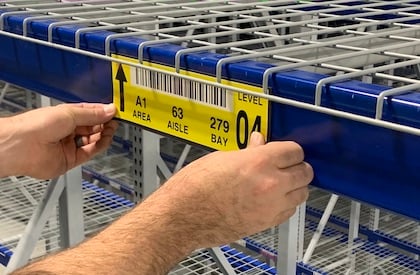 condensation freezes and refreezes, labels may shift or become dislodged if impacted, especially in high-traffic areas.
Adhesive-backed labels are better suited for permanent or high-traffic installations. When constructed with pressure-sensitive synthetic films, freezer-grade adhesives, and protective laminates, they maintain strong adhesion and scan performance in cold storage environments where resistance to moisture, abrasion, and freeze-thaw cycles is critical.
"They're resistant to moisture, chemicals and abrasions," Schiltz said. "And they can perform in temperatures as low as negative 65 degrees."
While magnetic systems offer flexibility, adhesive solutions often deliver stronger long-term ROI by reducing maintenance, replacement frequency, and scan failures in cold chain environments.
What's Right for Your Environment?
Selecting the right labels for a cold storage warehouse depends on operating temperatures, surface conditions, and how products move between environments. In cold chain storage environments, performance depends on how materials react to moisture, freezing and temperature changes.
Paper labels are generally unsuitable for cold storage applications. They absorb moisture during condensation events, which leads to warping, curling, and adhesive failure. In freeze-thaw conditions, this quickly results in unreadable barcodes and operational issues.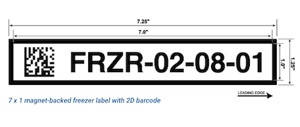
That's why synthetic materials such as polypropylene and polyester labels are better suited for cold chain storage environments. They resist moisture absorption and maintain stability in low temperatures. When paired with freezer-grade adhesives, they deliver consistent performance across frozen and refrigerated environments.
Protective laminates or topcoats add another layer of durability by shielding labels from frost, abrasion, and repeated handling. This is especially important where products move between freezer storage, transport, and ambient conditions, creating recurring condensation cycles that can degrade lower-grade materials.
Understanding how materials perform under these conditions is key to selecting reliable cold storage labels that maintain scan performance and durability.
ID Label works with cold storage operators to evaluate environmental conditions and recommend label systems tailored to specific operational needs.
Read the Buyer's Guide to Warehouse Freezer Labels
Finding the most effective labeling option for your freezer storage needs can be a challenge. Read our free buyer's guide to learn more. We include a convenient grid comparing a variety of label material options and performance factors.
Frequently Asked Questions
What are freezer-grade labels?
Freezer-grade labels are engineered for low-temperature environments such as cold storage and freezer facilities. They use synthetic facestocks and specialized adhesives designed to maintain adhesion and scan performance in freezing conditions and across temperature fluctuations.
How do I prevent labels from failing in cold storage?
Label failure is typically caused by moisture, condensation, or incorrect material selection. Using synthetic materials, freezer-grade adhesives, and ensuring proper surface preparation helps maintain adhesion and barcode readability in cold chain environments.
Can labels be applied in freezing temperatures?
Some labels are designed for low-temperature application, but many require ambient conditions to bond properly. It's important to match the adhesive type to the application environment to ensure long-term performance in cold storage settings.
What causes frost buildup on cold storage labels?
Frost forms when warm, humid air comes into contact with cold surfaces, especially during temperature transitions. This condensation can weaken adhesives and interfere with barcode scanning in cold storage and cold chain environments.
Are magnetic labels better for cold storage facilities?
Magnetic labels offer flexibility and easy repositioning, but they can be affected by frost buildup over time. Adhesive-backed labels are often preferred for permanent or high-traffic applications where long-term stability is more important.
The ID Label Advantage
Cold storage labeling requires solutions built for moisture, freezing temperatures, and constant environmental change. That's why ID Label has cold chain storage experts who can properly evaluate conditions and recommend labels that ensure reliable performance and scan accuracy.
Our warehouse rack and bin labels are engineered for demanding cold chain environments where adhesion and durability are critical. We also provide custom installation to ensure our labels are implemented correctly and efficiently into your systems.
To learn more about your warehouse cold storage label choices and to request samples for testing in your environment, contact ID Label today.