

"Signs, signs, everywhere are signs."
Enter a typical warehouse or distribution center today, and you might be reminded of that classic rock lyric. That's because proper signage is an essential part of productive warehouse operations.
As one of the industry's leading providers of warehouse signs, we put together this short guide to help you understand your warehouse sign options.
Warehouse signs help identify aisles, racks, bulk storage areas, dock doors, safety equipment and more. They are manufactured using a wide variety of materials and designs, including PVC and aluminum.
Supporting Speed and Efficiency
It might seem obvious, but warehouse signs play a critical role in helping forklift operators and other employees find precise inventory locations quickly and efficiently. This is especially critical for 3PLs and other facilities that frequently reorganize a building's layout and relocate stock due to seasonal or other demands.
Beyond productivity benefits, clear identification in a facility aids navigation, accuracy, safety, inventory management, and shipping operations.
The Importance of Warehouse Signs
Warehouse signs are important for maintaining organized, efficient, and safe operations. Clear signage allows employees to quickly locate inventory, identify staging and dock areas, and navigate forklift traffic safely. In fast-paced warehouse environments, proper signage reduces confusion, supports accurate picking and shipping, and helps prevent costly errors.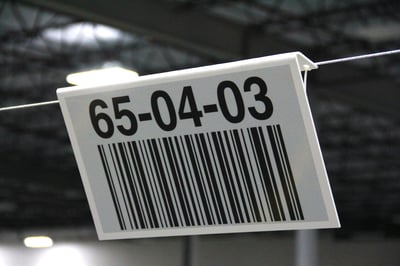
Beyond productivity, warehouse signs contribute to overall facility organization and help standardize processes across departments or even multiple locations.
Types of Warehouse Signs
Signs identify aisles, racks, bulk storage areas, dock doors, safety equipment and more. They are manufactured using a wide variety of materials and designs.
Let's look at some prime examples:
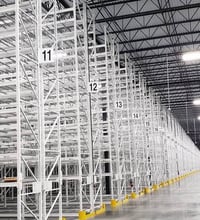
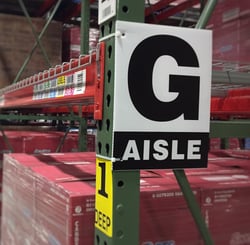 Warehouse aisle signs – Typically located at the end of aisles, these human-readable signs identify rack location areas to support efficient stocking and picking of inventory. Warehouse aisle signs come in a wide variety of formats, including flat, cube, and teepee designs. They are manufactured using an array of materials, from industrial-grade Coroplast or PVC to heavier-duty options like aluminum.
Bulk location signs – These signs are used to identify bulk storage areas, typically via an overhead hanging sign that contains a barcode image and human-readable numbers or letters. For operations that can accommodate long-range scanning, retro-reflective graphics are used for optimum scan accuracy. Overhead sign installation can easily accommodate a building's infrastructure. Some might hang from conduit or metal cabling, while others are mounted to existing joists or fixtures.
Staging signs – It's also common to label staging areas with proper signage. This helps facilitate the efficient movement of items that are transferred from pick or packaging areas to the staging location where they are ready to be loaded for outbound shipment. Inbound inventory may also be staged as it is removed from trucks as part of the put-away process. Installation options are similar to those for bulk locations.
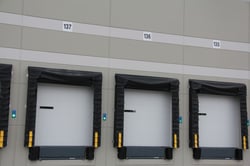 Warehouse dock signs – Loading docks should be clearly labeled with large signs – both inside and out – to support the efficient movement of inbound deliveries and outbound shipments. For long-lasting outdoor signs, ensure they are manufactured with durable materials and graphics that are able to withstand wind, rain and ultraviolet rays from the sun, which can cause fading and deterioration. Anodized aluminum material with UV-resistant graphics is typically a good solution to stand up to Mother Nature for several years. Warehouse dock signs must comply with OSHA standards (29 CFR 1910.145) for safety, requiring clear, durable, and visible indicators of hazards. Key requirements include using red/black/white for "Danger" signs (immediate hazards), yellow/black for "Caution" (potential hazards), and green/white for safety instructions.
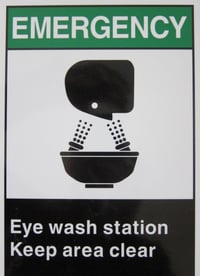
Warehouse safety signs – There are dozens of uses for safety signs in a typical warehouse or distribution center. Some of the most commonly used types of warehouse safety signs include: compliance signs, danger warning signs, hazard warning signs, materials handling signs, fire safety signs, PPE signs, and traffic signs.
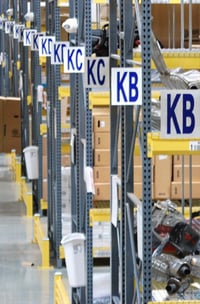 Warehouse rack signs – In dynamic warehouse environments, clear and durable rack signage is essential for efficient operations. Rack signs serve as vital navigational tools within warehouses and distribution centers. By identifying storage locations, they assist employees in locating inventory, reducing search time, and minimizing errors. ID Label specializes in designing and manufacturing high-quality rack signs that help streamline inventory management. Pallet rack load signs are an important subset of warehouse rack signage designed to communicate weight capacity and safety information for storage systems. These signs are typically mounted directly on rack structures and display maximum load limits, structural guidelines, or handling instructions.
Warehouse floor signs – Floor-based labels are commonly used to mark bulk aisles and pallet rack locations, define staging lanes and cross-dock areas, and identify hazard or specialty zones through color-coding. Warehouses typically choose between durable floor labels and metal floor labeling kits based on how permanent their layout needs to be—floor labels offer a flexible, low-profile option that's easy to install and replace, while metal kits provide a more permanent solution for long-term layouts. For areas where hanging signs aren't an option, ID Label's Floor Shield Labels and Covers are also a good solution to mark bulk locations.
Custom Warehouse Signs and Barcodes
Custom warehouse signs and barcodes are designed to meet the specific operational requirements of a facility. Customization may include unique numbering systems, barcode symbology, color coding, sizing, or mounting configurations. Properly designed barcode signs help ensure accurate scanning from required distances and angles, supporting efficient warehouse management system integration.
Benefits of Customization
Custom warehouse signage allows facilities to align labeling systems with workflow processes and inventory management systems. Custom sizing, colors, and barcode formats can improve visibility, scanning accuracy, and consistency throughout a facility. Customization also supports future scalability as warehouse layouts evolve or expand.
Design Considerations
When selecting warehouse signs, several design factors should be considered. Viewing distance, mounting height, lighting conditions, and scanning requirements all influence sign size and layout. High-contrast color combinations improve readability, while appropriate barcode sizing ensures reliable scanning performance. Signs should be positioned to maximize visibility without interfering with operations.
Materials for Custom Signs
Selecting the right material for custom warehouse signs depends on environmental conditions and durability requirements. Indoor facilities may use PVC or Coroplast, while outdoor applications often require anodized aluminum or UV-resistant graphics. For long-range scanning applications, retro-reflective materials may be recommended to improve barcode performance.
 Compliance and Safety
Warehouse signage plays an important role in maintaining compliance and promoting workplace safety. The Occupational Safety and Health Administration (OSHA) requires clear marking of emergency exits, fire protection equipment, and hazard areas. Proper safety signage helps communicate risks, direct traffic flow, and reinforce safe work practices. Durable and clearly visible signs help support compliance efforts and reduce the risk of workplace incidents.
Sign Materials and Designs
Warehouse signs should be manufactured to be durable and reliable, especially those that contain barcode images. After all, you're relying on them to scan accurately every time — even from long-range distances – and to help keep your operations running efficiently and productively.
As noted, warehouse signs can be manufactured using a variety of designs and materials, including:
- Lightweight, rigid PVC
- Coroplast
- Anodized aluminum
- Flat, angled and two-sided "Z" designs
- Retro-reflective or vinyl cut graphics
- Multicolor options
- Able to withstand harsh temperatures and environments
Not Sure What's Right for You? We Can Help!
ID Label produces thousands of signs annually for leading warehouse and DC operators, using a huge variety of designs, colors, fonts and materials. All signs are custom-manufactured to our clients' precise requirements.
Not sure which designs or materials are right for you? Let us recommend a complete solution that meets your needs and budget. We'll even install them for you!
The ID Label Advantage
ID Label manufactures extremely durable warehouse rack and bin location labels. Our materials have been tested and used in warehouse operations around the globe.
We also provide warehouse signage and turnkey nationwide installation services to provide a complete solution to our many clients who rely on us for all their warehousing needs.
Interested in learning more? Contact us today.
Warehouse Signs FAQs
What are warehouse signs?
Warehouse signs are visual identifiers used to label aisles, racks, bulk storage areas, dock doors, and safety zones within a warehouse or distribution center.
How often should I replace warehouse signs?
Warehouse signs should be replaced if they become damaged, faded, difficult to read or scan, or if facility layouts change.
What colors are available for warehouse signs?
Warehouse signs are available in a wide range of standard and custom colors, including high-contrast combinations for improved visibility.
Does ID Label provide installation services for warehouse signs?.png?width=259&height=259&name=Sign%20Installation%20(1).png)
Yes, ID Label provides turnkey nationwide installation services for warehouse signage.
When should I use retro-reflective signs instead of standard vinyl?
Retro-reflective signs are typically recommended when long-range barcode scanning is required.
What is the best way to clean warehouse signs without damaging the barcode?
Warehouse signs should be cleaned using a soft cloth and mild, non-abrasive cleaning solutions to avoid scratching or damaging barcode surfaces.